NOTE: This article is educational, not legal advice. Where VAT treatment depends on specific facts (for example, whether food is consumed on the premises or whether a particular product qualifies for zero-rating), readers should always consider the relevant legislation and HMRC guidance or seek professional advice.
Introduction to VAT for Restaurants in UK
A busy restaurant can serve hundreds of customers every week, generate healthy sales and still lose thousands of pounds because of incorrect VAT for Restaurants in UK .
Many restaurant owners assume VAT is straightforward. Charge VAT, submit a return and move on.
Unfortunately, restaurant VAT is rarely that simple.
The VAT for Restaurants in UK can vary depending on how food is sold, where it’s consumed, what type of food is supplied and whether the order is placed in person, online or through a delivery platform. Add service charges, tips, gift vouchers, meal deals and multiple sales channels into the mix, and it’s easy to see why hospitality is one of the sectors most frequently reviewed by HMRC.
We’ve worked with restaurant owners who have unknowingly overpaid VAT for years, reducing their profits without realising it. Others have underpaid VAT because they misunderstood the rules, leaving themselves exposed to assessments, interest and penalties.
The good news is that most restaurant VAT for Restaurants in UK problems can be avoided with the right systems and a clear understanding of the rules.
In this guide, you’ll learn:
- Why restaurant VAT is more complicated than many business owners realise
- How VAT works for different types of food and drink sales
- The most common VAT mistakes restaurants make
- How delivery platforms affect VAT reporting
- When your restaurant must register for VAT
- Practical steps to stay compliant and avoid unnecessary costs
Whether you operate a café, independent restaurant, takeaway, food truck, dark kitchen or multi-site hospitality group, understanding VAT is essential for protecting both your profits and your business.
Why VAT for Restaurants in UK Is More Complicated Than Most Businesses
Many industries apply the same VAT for Restaurants in UK treatment to nearly every sale they make.
Restaurants don’t have that luxury.
A single business may sell:
- Dine-in meals
- Hot takeaway food
- Cold takeaway food
- Soft drinks
- Alcoholic drinks
- Desserts
- Catering services
- Gift vouchers
- Online orders
- Delivery orders
Each transaction may have different VAT for Restaurants in UK implications depending on the facts.
That’s why hospitality businesses require far more careful VAT management than many other sectors.
Restaurant owners also need to consider:
- Multiple payment methods
- EPOS systems
- Delivery platform reporting
- Promotional offers
- Staff meals
- Complimentary food
- Wastage
- Mixed supplies
- Seasonal promotions
Without accurate records and appropriate VAT processes, mistakes can easily occur—even in well-managed businesses.
Why HMRC Pays Close Attention to Restaurants
Restaurants process a high volume of daily transactions, often involving both cash and card payments, online ordering platforms and multiple VAT treatments.
From HMRC’s perspective, this combination creates a greater risk of errors than in many other industries.
Common areas HMRC may review include:
- VAT registration timing
- VAT applied to food and drink
- Sales recorded through EPOS systems
- Delivery platform income
- Cash handling procedures
- Digital record keeping
- Input VAT claims
- VAT returns compared with business performance
This doesn’t mean every restaurant will receive a VAT inspection.
However, maintaining accurate records and understanding your VAT obligations significantly reduces the likelihood of costly disputes.
How VAT Works for VAT for Restaurants in UK
VAT is a tax charged on many goods and services supplied in the UK.
When a restaurant is VAT registered, it generally:
- Charges VAT where applicable on taxable sales (known as output VAT).
- Pays VAT on many business purchases (known as input VAT).
- Normally pays HMRC the difference between the two through its VAT return.
For restaurants, the challenge isn’t understanding this basic principle.
The challenge is determining which sales are taxable, at what rate, and ensuring they are recorded correctly.
A single day’s takings could include multiple VAT treatments depending on the nature of each transaction.
That’s why accurate EPOS configuration and bookkeeping are so important.
Understanding VAT for Restaurants in UK Rates
One of the most common misconceptions is that every restaurant sale is treated in exactly the same way for VAT.
In reality, the correct VAT treatment depends on the specific supply being made.
For example, factors that may affect VAT treatment include:
- Whether food is consumed on the premises
- Whether it is hot or cold
- The nature of the food supplied
- Whether drinks are included
- Whether multiple items are sold together
- Whether delivery forms part of the supply
Because these situations can vary, restaurant owners should avoid making assumptions based solely on how similar businesses operate.
Instead, they should ensure each type of sale has been reviewed and configured correctly within their accounting and EPOS systems.
Eat-In vs Takeaway – One of the Most Misunderstood Areas
Perhaps the area that creates the greatest confusion is the difference between food eaten on the premises and food taken away.
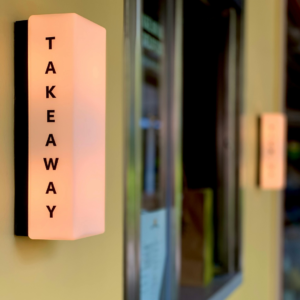
Restaurant owners often assume the same VAT treatment applies simply because the food itself is identical.
However, VAT depends on the nature of the supply rather than just the ingredients.
For businesses offering both dine-in and takeaway services, correctly distinguishing between different types of sales is essential.
Errors frequently arise where:
- Staff select the wrong option on the till.
- EPOS systems are incorrectly configured.
- Mixed orders contain items with different VAT treatments.
- Businesses expand into takeaway or delivery without reviewing VAT procedures.
Regular reviews of EPOS settings can help reduce these risks and improve reporting accuracy.
Delivery Platforms Add Another Layer of Complexity
Online ordering has transformed the restaurant industry.
For many businesses, platforms such as Uber Eats, Deliveroo and Just Eat now represent a significant proportion of weekly sales.
While these platforms simplify customer ordering, they often make VAT reporting more complicated.
Restaurant owners need to understand:
- How sales should be recorded.
- How platform commissions are treated.
- Which amounts represent turnover.
- How settlement reports reconcile with bank receipts.
- What documentation should be retained.
Simply recording the amount received into the bank account rarely provides an accurate picture for VAT purposes.
Reconciling platform reports with accounting records is essential for maintaining accurate VAT returns.
The Cost of Getting Restaurant VAT Wrong
VAT mistakes rarely remain hidden forever.
When errors continue over several VAT periods, the financial consequences can become significant.
Potential outcomes include:
- Additional VAT becoming payable.
- Interest on underpaid tax.
- Financial penalties.
- Time-consuming HMRC enquiries.
- Increased professional costs.
- Disruption to the business.
- Unnecessary stress for owners.
On the other hand, charging the wrong VAT can also result in overpaying VAT, reducing profits and affecting cash flow.
This is why restaurant VAT should be reviewed regularly rather than only when preparing quarterly VAT returns.
The Hidden Cost of “We’ve Always Done It This Way”
One of the biggest risks we see is businesses relying on historical practices without checking whether they remain correct.
Perhaps the previous accountant set up the VAT codes.
Perhaps the EPOS system was configured years ago.
Perhaps menu changes, new delivery services or additional locations have been introduced over time.
Small changes in how a restaurant operates can have wider VAT implications.
Reviewing VAT procedures periodically helps ensure your systems continue to reflect how the business actually trades today.
Common Restaurant VAT Scenarios Every Owner Should Understand
Restaurant owners deal with hundreds of transactions every day, but not every sale is treated in the same way for VAT purposes.
Understanding the most common situations can help reduce errors and improve the accuracy of your VAT returns.
Dine-In Meals
When customers eat food within your restaurant, the supply is generally treated differently from some takeaway sales.
Because dine-in service forms part of the overall customer experience, including the use of seating, facilities and staff service, restaurants should ensure these sales are correctly identified within their EPOS and accounting systems.
Where businesses offer both dine-in and takeaway options, accurate till configuration is essential to avoid VAT being applied incorrectly.
Takeaway Food
Takeaway sales are one of the biggest causes of confusion.
Many restaurant owners assume that all takeaway food receives identical VAT treatment.
Unfortunately, that’s not always the case.
The VAT position depends on several factors, including the nature of the food supplied and whether it is provided hot or cold.
Businesses that regularly introduce new menu items should review the VAT treatment before those products go on sale rather than assuming existing settings remain appropriate.
Hot Food
Food supplied hot for consumption is an area where mistakes frequently occur.
Restaurants should understand why food is being heated, how it is presented and the circumstances in which it is supplied, as these factors may influence the VAT treatment.
Rather than relying on assumptions, businesses should ensure staff understand how different products should be recorded through the till.
Cold Food
Cold takeaway food may not always receive the same VAT treatment as hot food.
The correct treatment depends on the nature of the product being supplied.
Businesses selling sandwiches, salads, desserts or other cold items should periodically review how these products are configured within their EPOS system to ensure consistency.
Drinks
Beverages often have different VAT implications from food.
Restaurants selling soft drinks, speciality coffees, smoothies or alcoholic drinks should ensure these sales are categorised correctly within their accounting software.
As menus evolve, new products should be reviewed before they are added to avoid incorrect VAT coding.
Alcohol Sales
Alcohol frequently represents one of the highest-margin areas of a restaurant.
Because of its importance, businesses should ensure alcohol sales are accurately separated from food sales for both management reporting and VAT purposes.
This also supports more meaningful analysis of profitability by product category.
Restaurant Delivery Platforms – Why VAT Reporting Becomes More Difficult
Delivery platforms have changed the way restaurants operate.
While they increase convenience for customers, they also introduce additional accounting challenges.
Restaurant owners often receive settlement statements showing:
- Customer orders
- Platform commissions
- Promotional deductions
- Refunds
- Delivery charges
- Net amounts transferred to the bank
Simply recording the money received into the bank account rarely provides an accurate accounting record.
Instead, restaurants should reconcile platform statements against their accounting records to ensure:
- Sales are complete.
- Commission costs are recorded correctly.
- VAT reporting remains accurate.
- Financial reports reflect true profitability.
Without proper reconciliation, businesses may unintentionally understate turnover or misunderstand their actual profit margins.
Service Charges, Tips and Tronc Arrangements
Hospitality businesses frequently receive additional payments from customers beyond the cost of food and drink.
These can include:
- Voluntary tips
- Card tips
- Mandatory service charges
- Tronc distributions
Each may have different tax and payroll implications.
Many restaurant owners mistakenly assume that all gratuities are treated in exactly the same way.
In reality, the position depends on how the payments are collected, controlled and distributed.
Because payroll, National Insurance and VAT considerations may all arise, restaurants should ensure their tipping arrangements are reviewed periodically.
A properly structured tronc arrangement can also improve compliance while providing greater clarity for both employers and employees.
Gift Vouchers and Promotional Offers
Gift vouchers are increasingly popular, particularly during Christmas and special occasions.
However, accounting for vouchers is not always straightforward.
Restaurants should understand:
- when income is recognised
- when VAT becomes relevant
- how redeemed vouchers are recorded
- how unused vouchers should be treated
Similarly, promotional campaigns such as:
- meal deals
- discount vouchers
- loyalty rewards
- free drinks
- two-for-one offers
should be reviewed carefully to ensure accounting records continue to reflect the underlying transactions accurately.
When Does a Restaurant Need to Register for VAT?
Many restaurant owners assume they only need to think about VAT once their accountant mentions it.
In reality, businesses should monitor their taxable turnover throughout the year.
Failing to register at the correct time can result in:
- unexpected VAT liabilities
- interest
- penalties
- administrative complications
Voluntary registration may also be beneficial for some restaurants, particularly where significant input VAT is being incurred during the early stages of trading.
The right approach depends on factors such as:
- expected turnover
- customer profile
- pricing strategy
- business model
- planned growth
This is why VAT registration should form part of wider financial planning rather than simply being viewed as a compliance requirement.
Choosing the Right VAT Scheme
Not every VAT-registered restaurant uses the same accounting method.
Several schemes are available, and selecting the most appropriate one can improve efficiency and, in some circumstances, cash flow.
Examples include:
Standard VAT Accounting
Suitable for many established restaurant businesses with straightforward reporting requirements.
Cash Accounting Scheme
Some businesses may benefit from accounting for VAT based on when payments are received and made rather than when invoices are issued.
This can assist cash flow in appropriate circumstances.
Annual Accounting Scheme
Some eligible businesses may prefer submitting one annual VAT return while making advance payments throughout the year.
This can simplify administration for certain operators.
Flat Rate Scheme
Historically, some smaller restaurants considered the Flat Rate Scheme.
Whether it remains appropriate depends on the individual business and should be reviewed carefully, particularly where profit margins and input VAT recovery are important.
The 10 Most Common Restaurant VAT Mistakes
After working with hospitality businesses, these are some of the issues we encounter most frequently.
- Assuming every sale has the same VAT treatment.
- Incorrect EPOS VAT configuration.
- Recording delivery platform settlements incorrectly.
- Failing to reconcile till reports with accounting records.
- Registering for VAT too late.
- Claiming input VAT without adequate evidence.
- Mixing business and personal expenditure.
- Ignoring VAT implications when changing the menu.
- Treating service charges and gratuities incorrectly.
- Waiting until the VAT return is due before reviewing transactions.
Most of these mistakes are entirely preventable with appropriate systems and regular reviews.
Restaurant VAT Compliance Checklist
A simple monthly review can significantly reduce the risk of VAT errors.
Use this checklist to keep your restaurant on track:
Review EPOS VAT settings.
Reconcile daily sales with accounting records.
Check delivery platform reports.
Review supplier invoices.
Retain digital VAT records.
Monitor VAT liabilities.
Review new menu items.
Reconcile bank transactions.
Prepare for upcoming VAT returns.
Discuss unusual transactions with your accountant before submitting your return.
Restaurants that follow consistent processes are far less likely to experience problems during an HMRC review.
How Technology Helps Restaurants Stay VAT Compliant
Modern restaurants process hundreds or even thousands of transactions every week across multiple sales channels. Managing VAT manually is no longer practical for most hospitality businesses.
The right technology doesn’t just reduce administration—it also improves accuracy, saves time and provides greater confidence that VAT returns are being prepared correctly.
Cloud Accounting Software
Cloud accounting platforms such as Xero automatically import bank transactions, simplify reconciliations and provide real-time financial information.
Instead of waiting until the end of the quarter, restaurant owners can monitor their VAT position throughout the year and identify issues before they become costly.
EPOS Integration
Your EPOS system is often the starting point for accurate VAT reporting.
When integrated correctly with your accounting software, it can:
- Record daily sales automatically
- Separate different sales categories
- Reduce manual data entry
- Improve reporting accuracy
- Make VAT reconciliation significantly easier
Regular reviews remain important, particularly after introducing new menu items or changing pricing structures.
Digital Record Keeping
Maintaining organised digital records helps restaurants remain compliant with HMRC’s digital record-keeping requirements while making future VAT enquiries far easier to manage.
Digital systems also reduce the likelihood of missing purchase invoices or claiming incorrect input VAT.
The Restaurant VAT Health Check
One of the simplest ways to reduce VAT risk is to review your processes regularly rather than waiting until a VAT return is due.
Ask yourself these questions:
Sales
- Are all sales channels being recorded correctly?
- Does your EPOS system reflect your current menu?
- Have new products been reviewed for VAT purposes?
Delivery Platforms
- Are Uber Eats, Deliveroo and Just Eat reports reconciled?
- Are commissions being recorded correctly?
- Does turnover agree with settlement reports?
Purchases
- Are supplier invoices reviewed regularly?
- Are VAT claims supported by valid documentation?
- Is personal expenditure excluded?
VAT Returns
- Do VAT returns agree with accounting records?
- Are unusual transactions reviewed before submission?
- Is sufficient cash being set aside for future VAT payments?
Compliance
- Are digital records complete?
- Have VAT procedures been reviewed within the last year?
- Has your accountant explained your VAT position clearly?
If several of these questions make you pause, your restaurant may benefit from a professional VAT review.
How Specialist Restaurant Accountants Add Value
Preparing a VAT return is only one part of managing restaurant VAT effectively.
A specialist restaurant accountant helps business owners understand the financial impact of VAT decisions before they affect profitability.
At AccounTax Zone, we work proactively with restaurant owners throughout the year rather than simply processing quarterly returns.
Our support includes:
VAT Reviews
We review your existing VAT processes to identify potential risks, inefficiencies and opportunities for improvement.
VAT Return Preparation
We prepare and submit accurate VAT returns while ensuring supporting records remain organised and compliant.
EPOS & Accounting System Reviews
We help ensure your accounting software and EPOS systems are configured appropriately to support accurate VAT reporting.
Restaurant-Specific Advice
Hospitality businesses face challenges that many accountants rarely encounter.
Whether you’re introducing delivery services, opening another location or changing your business model, we provide advice tailored specifically to restaurants.
HMRC Support
Should HMRC raise questions about your VAT affairs, we deal with HMRC on your behalf, helping minimise disruption and supporting you throughout the enquiry process.
Why Restaurants Choose AccounTax Zone
Choosing an accountant isn’t simply about finding someone to submit tax returns.
It’s about working with advisers who understand the financial realities of running a restaurant.
Our clients value us because we:
- Specialise in restaurants, cafés, takeaways and hospitality businesses.
- Understand the complexities of restaurant VAT and payroll.
- Provide proactive advice throughout the year—not just at year-end.
- Deliver meaningful management reporting that supports better decisions.
- Help improve cash flow and profitability, not just compliance.
- Offer fixed monthly fees with no unexpected surprises.
- Provide a dedicated accountant who understands your business.
- Support ambitious restaurant owners as they grow.
Whether you’re opening your first restaurant or expanding into multiple locations, our advice evolves with your business.
Related Reading
- Accountant for Restaurant
- Cash Flow for a Restaurant: The Complete Guide to Improving Financial Stability and Profitability
- Poor Bookkeeping Is Hiding Your Restaurant’s True Profit
- Restaurant Payroll Mistakes Could Cost You Thousands
- Is Your Restaurant Holding Too Much Stock?
- Struggling to Manage Restaurant Staff?


