Ratio for Inventory Turnover – A Complete Guide to the Inventory Turnover Ratio for Restaurants
Introduction
Your restaurant might be busy.
Customers are ordering.
Tables are full.
Sales look healthy.
Yet your bank balance never seems to improve.
For many restaurant owners, the problem isn’t sales.
It’s inventory.
Every ingredient sitting in your fridge, freezer or dry store represents money that has already left your bank account. If stock isn’t used quickly enough, it becomes cash sitting on a shelf instead of generating profit. In some cases, it spoils before it’s ever sold.
This is why successful restaurants don’t just monitor sales.
They monitor how quickly inventory turns into revenue.
The Ratio for Inventory Turnover is one of the most important financial performance indicators in the hospitality industry. It helps restaurant owners understand whether they’re purchasing efficiently, managing stock effectively and protecting their cash flow.
A poor Ratio for Inventory Turnover can lead to:
- Excess food waste
- Cash flow problems
- Higher storage costs
- Reduced profitability
- Increased risk of theft
- Expired stock
- Poor purchasing decisions
A healthy Ratio for Inventory Turnover , on the other hand, usually indicates that your restaurant is purchasing the right quantities, controlling waste and converting inventory into sales efficiently.
In this guide, you’ll learn:
- What the Ratio for Inventory Turnover is.
- Why it matters for restaurants.
- How to calculate it correctly.
- What a good Ratio for Inventory Turnover looks like.
- The most common reasons restaurants struggle with inventory.
- Practical ways to improve inventory management and profitability.
Whether you run a café, takeaway, fine dining restaurant or a growing hospitality group, understanding this KPI can help you make smarter purchasing decisions and improve your restaurant’s financial performance.
Why Inventory Management Matters More Than Most Restaurant Owners Realise
Many restaurant owners think inventory is simply a stock control issue.
In reality, it’s a profitability issue.
Every pound tied up in unnecessary stock is a pound that cannot be used to pay suppliers, invest in marketing, upgrade equipment or improve cash flow.
Restaurants operate with perishable products, changing customer demand and relatively narrow profit margins.
Unlike many other businesses, food loses value over time.
Fresh ingredients spoil.
Frozen products exceed their shelf life.
Dry goods become obsolete after menu changes.
Every day that inventory sits unused, it increases the financial pressure on your business.
That’s why inventory management isn’t just about counting stock.
It’s about managing cash.
AccounTax Zone Insight: One of the biggest mistakes we see is restaurant owners celebrating bulk supplier discounts without calculating how much additional cash they've tied up in slow-moving stock. Buying more isn't always saving more.
What Is the Inventory Turnover Ratio?
The Ratio for Inventory Turnover measures how efficiently a restaurant uses and replaces its inventory over a specific period.
In simple terms, it shows how many times your average stock is sold and replaced during the year.
Rather than focusing solely on sales, this ratio helps answer an important operational question:
“Are we buying the right amount of stock for the level of business we’re doing?”
A restaurant with healthy inventory turnover generally purchases ingredients at the right time, uses them efficiently and avoids holding unnecessary stock.
A restaurant with poor Ratio for Inventory Turnover may be carrying excessive inventory, wasting ingredients or tying up valuable cash that could be used elsewhere in the business.
Inventory turnover isn’t just an accounting ratio.
It’s a measure of operational efficiency.
Why Restaurant Owners Should Care About Inventory Turnover
Inventory is often one of the largest current assets on a restaurant’s balance sheet.
Unlike equipment or furniture, inventory constantly changes.
It is purchased.
Stored.
Prepared.
Sold.
Replaced.
If this cycle slows down, several financial problems usually follow.
Restaurants with poor inventory turnover often experience:
- Higher food waste
- More expired ingredients
- Greater storage costs
- Lower cash availability
- Increased theft risk
- Reduced gross profit
- Poor purchasing decisions
On the other hand, restaurants with healthy inventory turnover generally have stronger cash flow, better purchasing discipline and more accurate stock control.
Inventory turnover also affects several other financial indicators, including:
- Food Cost Percentage
- Gross Profit Margin
- Cash Flow
- Working Capital
- Return on Investment
This is why experienced restaurant operators rarely review inventory in isolation.
Instead, they consider how stock management affects the wider financial performance of the business.
Inventory Turnover Ratio Formula
The inventory turnover ratio compares the cost of food sold with the average amount of inventory held during the same period.
Inventory Turnover Ratio = Cost of Goods Sold (COGS) ÷ Average Inventory
The calculation itself is straightforward.
The challenge is ensuring both figures are accurate.
Many restaurant owners calculate inventory turnover using sales instead of the cost of goods sold, which produces misleading results.
Similarly, relying on inaccurate stock valuations will distort the ratio and reduce its usefulness.
AccounTax Zone Insight: The Ratio for Inventory Turnover is only as accurate as your bookkeeping and stock records. If inventory counts are inconsistent or supplier invoices haven't been recorded correctly, the ratio may lead to poor business decisions rather than better ones.
Understanding Cost of Goods Sold (COGS)
Cost of Goods Sold, often referred to as COGS, represents the direct cost of producing the food and beverages sold to customers.
For restaurants, this typically includes:
- Food ingredients
- Beverages
- Packaging
- Disposable serving items directly related to sales
It does not normally include costs such as:
- Staff wages
- Rent
- Utilities
- Marketing
- Insurance
- Administrative expenses
Using COGS rather than total sales provides a more meaningful picture of how efficiently inventory is being used.
What Is Average Inventory?
Average inventory represents the typical value of stock held during the period being analysed.
Rather than relying on a single stock count, average inventory smooths out fluctuations caused by large supplier deliveries or seasonal purchasing.
It provides a more realistic measure of how much inventory your restaurant actually carried while generating sales.
Restaurants that perform regular stocktakes generally produce much more reliable inventory turnover calculations than businesses relying on infrequent estimates.
AccounTax Zone Insight: We recommend carrying out regular stocktakes at consistent intervals. Monthly stock counts are often sufficient for many independent restaurants, while larger or multi-site businesses may benefit from more frequent reviews of key inventory categories.
A Practical Example
Let’s imagine a restaurant reports:
Cost of Goods Sold: £420,000
Average Inventory: £35,000
Inventory Turnover Ratio:
£420,000 ÷ £35,000 = 12
This means the restaurant replaces its average inventory approximately 12 times during the year.
On average, stock is being converted into sales roughly once every month.
On its own, this number doesn’t tell the full story.
The ratio should always be interpreted alongside factors such as:
- Menu type
- Restaurant concept
- Supplier lead times
- Storage capacity
- Food waste levels
- Seasonal demand
Understanding the context is just as important as calculating the ratio itself.
Why This Ratio Matters Beyond Stock Control
Many restaurant owners assume the Ratio for Inventory Turnover is only relevant to chefs or kitchen managers.
In reality, it influences almost every aspect of the business.
A healthy Ratio for Inventory Turnover often leads to:
- Better cash flow
- Lower food waste
- Improved gross profit
- More efficient purchasing
- Reduced storage costs
- Stronger supplier management
- Better forecasting
- Higher overall profitability
It also provides valuable insight into how effectively your restaurant converts inventory into revenue.
Rather than viewing inventory as something sitting on shelves, successful restaurant owners see it for what it really is:
Working capital waiting to generate profit.
What Is a Good Inventory Turnover Ratio for a Restaurant?
This is one of the most common questions restaurant owners ask.
Unfortunately, there isn’t a single “perfect” inventory turnover ratio that applies to every restaurant.
The right ratio depends on several factors, including:
- Your restaurant concept
- The type of food you serve
- How frequently you receive supplier deliveries
- Your menu size
- Storage capacity
- Seasonal demand
- Customer volumes
For example, a quick-service restaurant serving a limited menu will usually turn inventory much faster than a fine dining restaurant offering premium ingredients and an extensive wine list.
Rather than comparing your business with every other restaurant, it’s often more useful to compare your own performance over time.
Ask yourself:
- Is inventory turning faster or slower than last quarter?
- Has food waste increased?
- Are we holding more stock than necessary?
- Has our cash flow improved?
Consistent improvement is usually more valuable than chasing an arbitrary benchmark.
AccounTax Zone Insight: We encourage restaurant owners to monitor inventory turnover alongside Food Cost %, Gross Profit Margin and Cash Flow. Looking at one KPI in isolation rarely tells the whole story.
Signs Your Ratio for Inventory Turnover May Be Too Low
A low Ratio for Inventory Turnover generally means stock is remaining in your business for longer before being sold.
This often results in cash being tied up unnecessarily and may indicate operational inefficiencies.
Common warning signs include:
- Ingredients frequently reaching their expiry dates.
- Refrigerators and storage areas always appear full.
- Food waste is increasing.
- Stock levels continue to grow despite stable sales.
- Cash flow feels tight even during busy periods.
- Purchasing decisions are based on supplier discounts rather than customer demand.
Holding excessive inventory doesn’t necessarily make your restaurant more prepared.
Instead, it often increases waste, storage costs and pressure on working capital.
Why Restaurants Experience Low Inventory Turnover
Several factors can reduce inventory turnover.
Understanding the underlying cause is more important than simply trying to increase the ratio.
Over-Ordering
One of the most common reasons restaurants hold excessive stock is overestimating customer demand.
Owners often purchase larger quantities to secure discounts or avoid running out of ingredients.
However, buying more than you need increases storage costs and ties up valuable cash.
Poor Sales Forecasting
Without reliable forecasting, purchasing decisions become reactive rather than planned.
Restaurants may order inventory based on assumptions instead of expected trading levels.
Regular sales analysis allows purchasing decisions to become more accurate over time.
Large Menus
Extensive menus often require restaurants to hold a wider range of ingredients.
Some products sell quickly.
Others remain unused for long periods.
Menu engineering can help identify slow-moving dishes that consume inventory without contributing significantly to profitability.
AccounTax Zone Insight: We've found that simplifying a menu often improves more than kitchen efficiency. It can reduce inventory levels, improve purchasing accuracy and strengthen cash flow at the same time.
Poor Stock Rotation
Even restaurants purchasing appropriate quantities can experience poor inventory turnover if stock isn’t rotated correctly.
Older ingredients should generally be used before newer deliveries wherever possible.
Simple inventory management practices can significantly reduce spoilage and unnecessary waste.
Ineffective Inventory Tracking
Restaurants relying on manual stock records or infrequent stocktakes often struggle to identify slow-moving inventory.
Without accurate information, purchasing decisions become increasingly difficult.
Technology and regular stock reviews help provide much greater visibility.
Can Inventory Turnover Be Too High?
Surprisingly, yes.
Many business owners assume a higher Ratio for Inventory Turnover is always better.
That’s not necessarily true.
An unusually high ratio may indicate that your restaurant is holding too little stock.
Potential consequences include:
- Frequently running out of ingredients.
- Emergency supplier purchases.
- Higher purchasing costs.
- Lost sales.
- Customer dissatisfaction.
- Increased pressure on kitchen operations.
The objective isn’t simply to maximise inventory turnover.
It’s to find the right balance between efficient stock management and maintaining excellent customer service.
Inventory Turnover vs Food Cost Percentage
Restaurant owners sometimes confuse these two important KPIs.
Although closely related, they measure different aspects of business performance.
Inventory Turnover Ratio
Measures how efficiently your restaurant converts inventory into sales over a period of time.
It focuses on inventory movement.
Food Cost Percentage
Measures the proportion of food sales consumed by ingredient costs.
It focuses on profitability.
A restaurant may have:
- Strong inventory turnover
- But poor food cost control
Or:
- Low inventory turnover
- Yet relatively stable food costs
Both KPIs should be monitored together to gain a complete understanding of operational performance.
AccounTax Zone Insight: Improving inventory turnover won't automatically increase profits. If food waste, portion control or pricing remain poor, profitability may still suffer. Successful restaurants monitor several KPIs together rather than relying on a single number.
Inventory Turnover vs Gross Profit
Gross profit measures how much money remains after deducting the direct cost of food and beverages sold.
Inventory turnover measures how efficiently stock is converted into those sales.
Together, they tell a powerful financial story.
For example:
A restaurant with excellent gross profit but poor inventory turnover may still experience cash flow problems because excessive stock is tying up working capital.
Likewise, a restaurant with excellent inventory turnover but weak gross profit margins may simply be selling food too cheaply.
Neither KPI should be analysed in isolation.
How to Improve Your Restaurant’s Inventory Turnover Ratio
Improving Ratio for Inventory Turnover isn’t about ordering less stock.
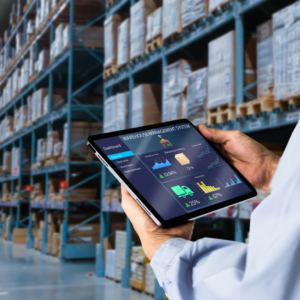
It’s about purchasing smarter, reducing waste and using accurate financial information to support better decisions.
Here are some practical ways to improve inventory efficiency.
Review Your Menu Regularly
Large menus often require a wide variety of ingredients.
Some are used daily.
Others may only appear in occasional dishes.
Regular menu reviews help identify low-performing items that increase inventory requirements without generating meaningful profit.
Simplifying your menu can often improve stock turnover while making kitchen operations more efficient.
Improve Sales Forecasting
Purchasing should be based on expected customer demand rather than intuition.
Historical sales data, seasonal trends and local events all provide valuable insight into future inventory requirements.
Better forecasting reduces both shortages and over-ordering.
Carry Out Regular Stocktakes
Accurate stock records are essential.
Regular stocktakes help identify:
- Slow-moving inventory.
- Food waste.
- Theft.
- Recording errors.
- Purchasing issues.
Restaurants that monitor inventory consistently generally make better purchasing decisions.
Strengthen Supplier Relationships
Reliable suppliers enable restaurants to order smaller quantities more frequently.
This reduces the need to hold excessive inventory while improving freshness and cash flow.
Strong supplier relationships often provide greater flexibility than maintaining large stock reserves.
Use Inventory Management Software
Modern inventory systems provide real-time visibility into stock levels, purchasing patterns and product usage.
When integrated with EPOS and accounting software, these systems significantly improve inventory accuracy while reducing manual administration.
AccounTax Zone Insight: Technology should support good processes—not replace them. Even the best inventory software won't improve profitability if stock counts aren't carried out consistently or purchasing decisions ignore the data.
Review Purchasing Decisions
Restaurant owners sometimes continue buying the same quantities simply because “that’s how we’ve always done it.”
Purchasing should evolve alongside customer demand, menu changes and seasonal trends.
Regular reviews help ensure inventory levels remain aligned with actual trading patterns rather than historical habits.
Common Inventory Turnover Mistakes Restaurant Owners Make
Even well-managed restaurants can misinterpret the Ratio for Inventory Turnover .
Some of the most common mistakes include:
- Calculating the ratio using sales instead of Cost of Goods Sold.
- Relying on outdated stock valuations.
- Carrying out stocktakes inconsistently.
- Ignoring food waste.
- Focusing solely on supplier discounts.
- Monitoring inventory annually instead of monthly.
- Reviewing inventory without considering cash flow.
- Measuring inventory turnover without comparing other KPIs.
Avoiding these mistakes makes the ratio significantly more useful as a management tool.
How Technology Can Improve Inventory Turnover
Managing inventory manually becomes increasingly difficult as a restaurant grows.
Multiple suppliers, hundreds of ingredients, changing menus and increasing customer demand all make accurate inventory management more complex.
Fortunately, modern technology allows restaurant owners to monitor inventory more accurately while reducing administrative work.
When your inventory systems integrate with your bookkeeping and accounting software, you gain a much clearer understanding of how stock affects profitability and cash flow.
Cloud Accounting Software
Cloud accounting software gives restaurant owners real-time visibility into their financial performance.
Rather than waiting until month-end, you can monitor:
- Food purchases
- Cost of Goods Sold (COGS)
- Gross profit
- Cash flow
- Supplier balances
- Inventory-related expenses
This allows purchasing decisions to be based on current financial information rather than outdated reports.
EPOS Integration
Your EPOS system records every sale.
When integrated with your accounting software and inventory management system, it provides valuable information about:
- Best-selling menu items
- Slow-moving dishes
- Ingredient usage
- Sales trends
- Peak trading periods
This enables more accurate purchasing and reduces unnecessary stock holding.
AccounTax Zone Insight: Restaurants often focus on reducing food costs while overlooking sales trends. Your EPOS system already contains valuable information that can improve purchasing decisions, you simply need to use it.
Inventory Management Software
Dedicated inventory software helps restaurants:
- Track stock levels
- Monitor ingredient usage
- Reduce food waste
- Improve purchasing accuracy
- Automate stock valuations
- Generate inventory reports
When integrated with accounting software, inventory data becomes even more valuable because financial performance and operational performance can be analysed together.
The Restaurant Inventory Health Check
Calculating your Ratio for Inventory Turnover is only the first step.
To gain meaningful insights, ask yourself the following questions.
Purchasing
- Are purchases based on actual sales trends?
- Do you regularly review supplier prices?
- Are you ordering more stock than you realistically need?
Inventory
- Do you carry out regular stocktakes?
- Are slow-moving ingredients identified quickly?
- Is stock rotated correctly?
- Are expiry dates monitored consistently?
Financial Reporting
- Do you know your current inventory value?
- Do you understand how inventory affects your cash flow?
- Are inventory reports reviewed alongside management accounts?
Operational Performance
- Are popular dishes frequently unavailable?
- Are ingredients regularly thrown away?
- Have food costs increased unexpectedly?
- Can you explain why your inventory turnover ratio changed?
If several of these questions highlight weaknesses, there is likely room to improve both inventory management and overall profitability.
How Specialist Restaurant Accountants Help Improve Inventory Performance
Many restaurant owners assume inventory management is solely the responsibility of the kitchen.
In reality, inventory affects almost every financial aspect of the business.
A specialist restaurant accountant helps connect operational data with financial performance, allowing owners to make better-informed decisions.
At AccounTax Zone, we help restaurants use financial information to improve inventory management rather than simply recording historic transactions.
Our support includes:
Management Accounts
Monthly management accounts highlight changes in:
- Food costs
- Gross profit
- Inventory values
- Cash flow
- Supplier spending
This allows restaurant owners to identify trends before they become costly problems.
Cash Flow Planning
Inventory ties up cash.
We help restaurants understand how purchasing decisions affect available working capital and future financial commitments.
Reducing unnecessary stock often improves cash flow without increasing sales.
Bookkeeping & Inventory Reporting
Accurate bookkeeping ensures inventory movements are reflected correctly within your financial records.
Reliable bookkeeping also supports:
- VAT compliance
- Profitability analysis
- Management reporting
- Forecasting
Business Growth Support
As restaurants expand into multiple locations, inventory management becomes increasingly complex.
We help businesses develop financial systems that grow alongside the business while maintaining accurate reporting across multiple sites.
AccounTax Zone Insight: Inventory isn't just a kitchen issue, it's one of your largest investments. The restaurants that grow successfully treat inventory as working capital that needs to generate a return, not simply as stock sitting in storage.
Why Choose AccounTax Zone?
Running a successful restaurant requires more than accurate accounts.
It requires financial insight.
At AccounTax Zone, we work with restaurants, cafés, takeaways and hospitality businesses across London and the UK, helping owners gain greater visibility over their financial performance and make more informed business decisions.
Our support includes:
- Restaurant bookkeeping
- Inventory reporting
- Management accounts
- Cash flow forecasting
- VAT advice
- Payroll
- Business performance reporting
- Tax planning
- Growth and expansion support
Most importantly, we explain your numbers in plain English, helping you understand what they mean and how they can improve your business.
Whether you’re operating a single independent restaurant or managing a growing hospitality group, our advice is tailored to your goals.
FAQs related to Ratio for Inventory Turnover
The inventory turnover ratio measures how many times a restaurant sells and replaces its average inventory during a specific period. It helps assess how efficiently stock is being managed.
Inventory turnover helps restaurant owners understand whether they are purchasing the right amount of stock, controlling food waste and using working capital efficiently.
Low inventory turnover may indicate over-ordering, slow-moving stock, excessive food waste or cash tied up in inventory for longer than necessary.
Yes. A very high inventory turnover ratio may suggest that inventory levels are too low, increasing the risk of stock shortages, emergency purchases and lost sales.
Most restaurants benefit from reviewing inventory turnover monthly alongside management accounts and other financial KPIs.
Yes. Inventory represents money already spent. Holding excessive stock reduces available cash and can place unnecessary pressure on working capital.
Improving purchasing decisions, reducing food waste, carrying out regular stocktakes, reviewing menus and using inventory management software can all contribute to better inventory turnover.
No. Inventory turnover measures how efficiently stock moves through the business, while food cost percentage measures how much food costs relative to food sales.
Yes. Specialist restaurant accountants analyse inventory alongside cash flow, management accounts, gross profit and purchasing data to help owners make better financial decisions.
Final Thoughts
Inventory turnover is far more than a financial formula.
It provides valuable insight into how efficiently your restaurant converts stock into revenue, manages working capital and protects profitability.
Restaurants with strong inventory management typically experience better cash flow, lower food waste and more accurate purchasing decisions. Those that ignore inventory performance often discover problems only after profits begin to decline or cash becomes tight.
Monitoring your inventory turnover ratio regularly, and understanding what influences it, can help you identify opportunities to improve operational efficiency and strengthen the long-term financial health of your restaurant.
Combined with accurate bookkeeping, meaningful management accounts and regular financial reviews, this KPI becomes a powerful decision-making tool rather than just another number on a report.
Ready to Improve Your Restaurant’s Inventory Performance?
If you’re unsure whether your inventory levels are affecting your profitability, cash flow or food costs, a specialist financial review can help uncover opportunities for improvement.
At AccounTax Zone, we work with restaurants across London and the UK to improve inventory reporting, strengthen financial controls and support sustainable business growth.
Book Your FREE Restaurant Financial Performance Review
During your consultation, we’ll review:
- Your inventory management processes
- Food cost trends
- Gross profit performance
- Cash flow
- Bookkeeping and management reporting
- Practical opportunities to improve profitability
There’s no obligation, just practical advice from accountants who understand the financial challenges of running a restaurant.
Related Reading
- Accountant for Restaurant
- Cash Flow for a Restaurant: The Complete Guide to Improving Financial Stability and Profitability
- VAT for Restaurants in UK Mistakes Could Be Costing You Thousands – The Complete UK Guide
- Poor Bookkeeping Is Hiding Your Restaurant’s True Profit
- Restaurant Payroll Mistakes Could Cost You Thousands
- Struggling to Manage Restaurant Staff?


